
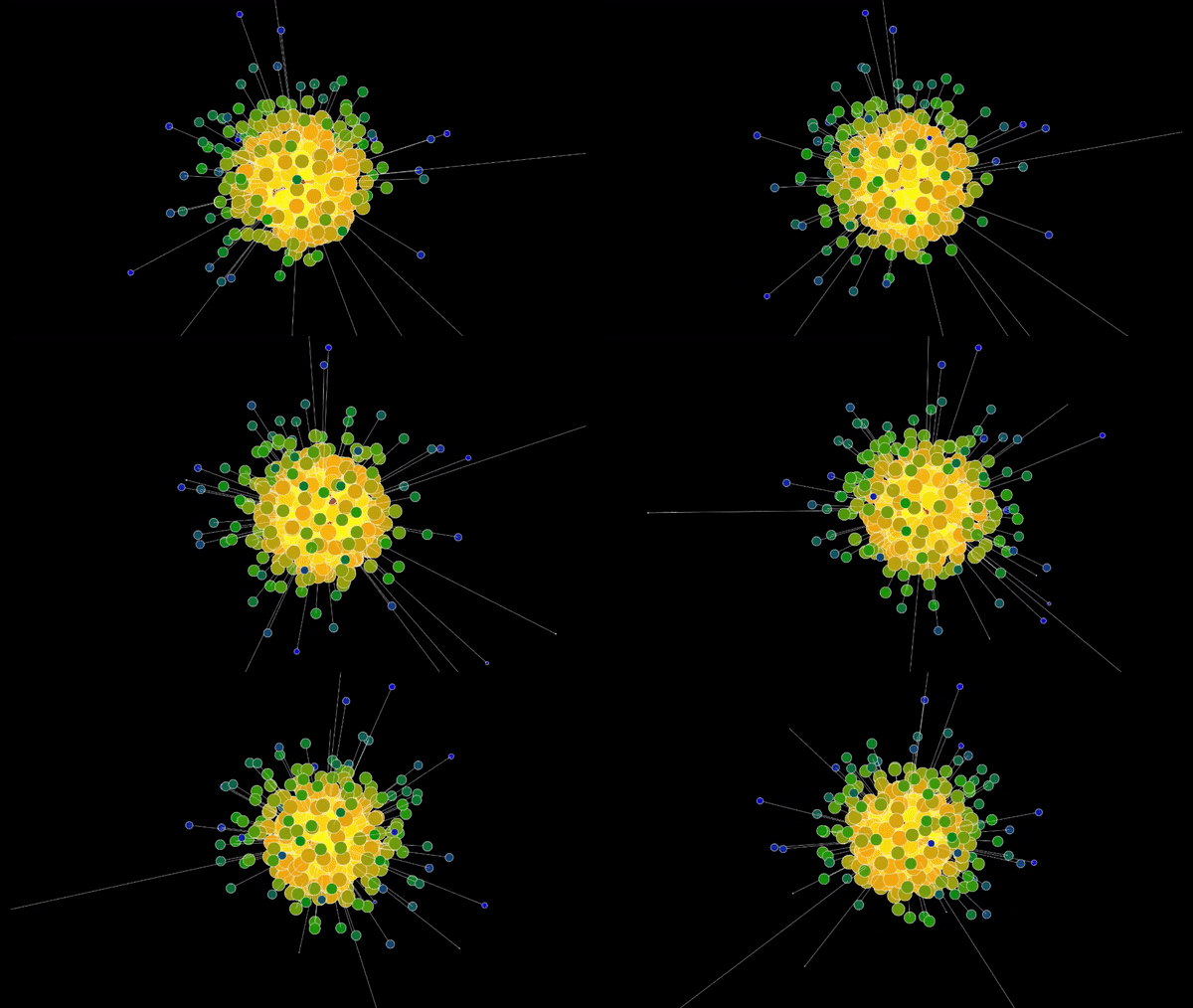
The scientists first looked at the frequency of the conversations. They expected it to be quite evenly spread, but what they saw was a high volume of rapid bursts of conversations. So the bees aren’t chatting in the same way all the time, they get bursts of chatiness.
Scientists compared the bee model to a model of typical human interactions and found they are almost identical. This is just like activity on social networks. So on a slow news day then the chatting on Twitter is pretty evenly spread, but on a big news day like when one of the Kardashians gets a new hat, then there will be bursts of chatiness. It’s not only the number of people talking that is interesting, it is also the increased frequency between chats that signifies “chatiness”.
According to one of the researchers “interestingly, despite being separated by about 600 million years of evolution, bees and humans show remarkably similar patterns of social interactivity”.
However, they also looked at the number of connections, and here they found a big difference compared to human interactions. Bees seem to focus more on making new connections rather than chatting to bees they already know, and this seemed to happen regardless of the number of connections they already had. Of the 700,000 interactions recorded in a month, over 90% occurred less than 3 times.
This is very different to human interactions, as humans typically tend to chat to the same people repeatedly. So while human social networks end up being optimised for repeated interactions with the same groups of people, bee networks are optimised to spread news quickly.
This means important information, such as updates on the health of the queen, can be passed to the entire hive within a few interactions.
This is great for a healthy queen, who can ensure that her subjects are kept in line. But its not so great if the queen gets injured, as the news quickly causes the workers to start nurturing new princesses, and as soon as a replacement is ready, the workers thermo-ball the old queen to death, and then get straight back to work supporting their newly crowned sister.
So it looks like the bee network is more of a news network than a social network.
And it turns out that a network designed for sharing news ends up looking very different from a network designed for socialising. This might seem obvious from the outside, but apparently it isn’t obvious to the thousands of people who use social media as a primary source of news.
