
2 JULY 2026
Contrary to general belief, honeybees don’t make a queen bee by merely feeding royal jelly to an ordinary larva. The design of the larva’s cell plays a critical role in shaping the larva’s development into a queen bee.
For generations, biology textbooks have been telling a simple story about how a queen bee is made. Give an ordinary larva a steady diet of royal jelly – the nutrient-rich substance produced by worker bees – and the ordinary larva is transformed into a queen bee.
Not so, finds a groundbreaking new study published this year in Nature. Postdoctoral researchers Yu Fang, Kai Wang and Yahya Al Naggar led the study, deploying expertise ranging from behaviour and physiology to materials science, chemistry, and genomics.
A queen bee is the outcome of an intricate, colony-wide effort involving specialised architecture, dedicated caregivers, carefully engineered materials, and even custom-built cell conditions. In other words, creating the queen bee takes an entire community of bees working together.
Queen bees and worker bees start life in almost exactly the same way, as nearly identical eggs. Yet their futures could not be more different.
Queens grow larger, develop faster, live significantly longer, and serve as the colony’s sole egg-laying individual. Workers, by contrast, spend their lives looking after the queen bee, maintaining the hive, making honey and supporting the colony.
For decades, scientists believed that royal jelly was the primary force driving this dramatic transformation. While nutrition remains essential, researchers now say it is only part of the equation.
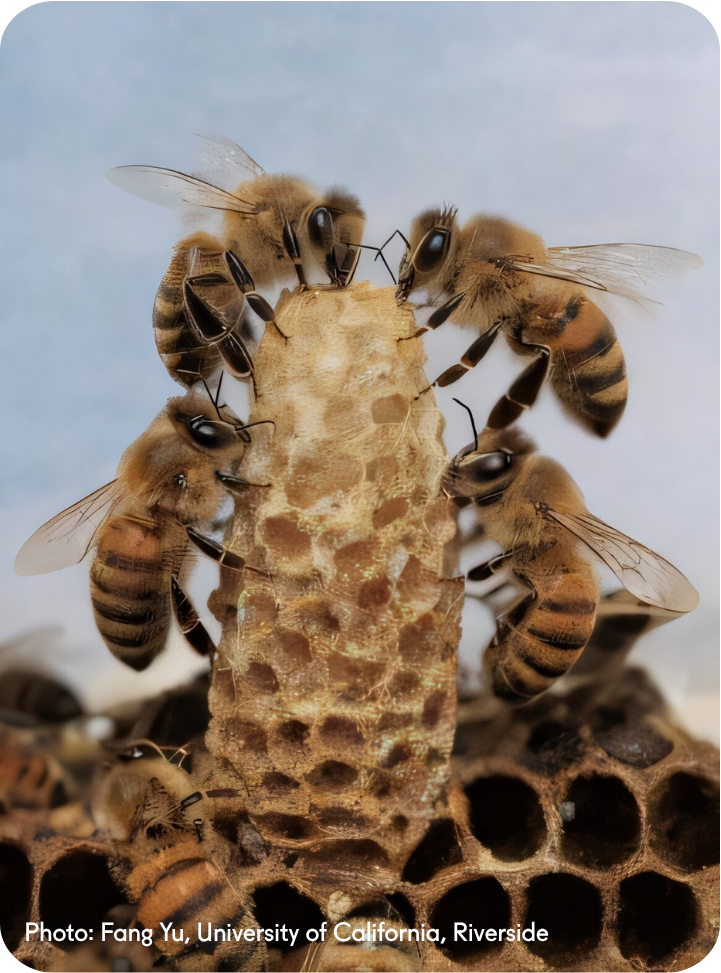
The study reveals that future queens are raised inside highly specialised structures known as queen cells. These unique cells provide a carefully controlled environment that appears crucial to producing healthy queens. Unlike the familiar hexagonal cells where worker bees develop, queen cells are larger, peanut-shaped structures designed specifically for raising future queens.
Using thermal imaging, behavioural tracking, materials science, and chemical analysis, researchers discovered that queen cells are remarkably different from ordinary brood cells.
The wax used to construct queen cells has distinct physical and chemical properties. It is less dense, more flexible, and better at maintaining warmth and moisture – conditions that are ideal for developing queen larvae. Researchers also found differences in fatty acids and chemical signals embedded within the wax, creating what appears to be a highly specialised developmental environment.
To determine whether these differences mattered, scientists conducted an experiment – they raised queen larvae in cells made from either queen-cell wax or ordinary worker-cell wax while keeping the diet the same.
The results were striking. Larvae raised in worker-cell wax were more likely to die and when they survived, often developed into smaller queens. The findings suggest that the surrounding environment is just as important as nutrition in shaping a queen bee’s development.
Perhaps the study’s most surprising discovery was the identification of a previously unrecognised group of worker bees. Queen cell workers are typically younger than many of their nestmates and uniquely adapted for the task of raising future queens. They can maintain higher body temperatures and undergo physiological changes while tending queen cells. Their body warmth may play a critical role in speeding development. A queen bee matures in roughly 16 days, compared to about 21 days for a worker bee – a significant advantage when a colony urgently needs a new egg layer to produce the next generation.
Rather than simply reusing wax from elsewhere in the hive, the queen cell workers actively collect, modify and enrich materials for the queen cells. In essence, they temporarily alter how their own bodies function in order to create the perfect environment for their next queen.
The researchers also uncovered evidence of sophisticated resource management within the hive. By adding trace amounts of graphite to ordinary honeycomb wax, the researchers were able to track how materials moved through the colony. Over time, the marked wax appeared in queen cells, demonstrating that workers selectively gather and transform existing materials for queen cell use.
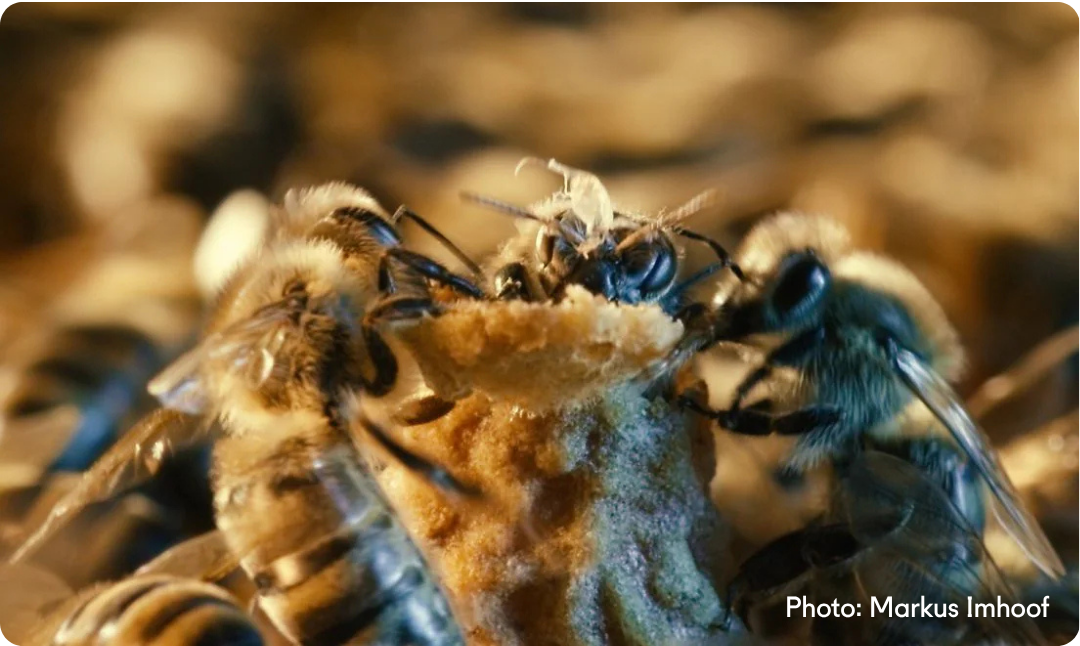
The research provides a new view of insect societies. The study found similar patterns in both Asian and European honeybee species, suggesting that this strategy evolved deep in honeybee history.
More broadly, the findings challenge scientists to rethink how development works – not only in insects but across biology. They highlight the powerful influence of surroundings, social interactions and built environments in shaping how organisms grow and develop.
For decades, the queen bee represented one of nature’s simpler success stories- special food creates a special individual.
This new research paints a much richer picture.
An ordinary larva is transformed into a queen bee by an entire colony’s coordinated effort – an extraordinary example of collective engineering, cooperation and biological sophistication.
As Boris Baer notes, honeybee colonies “function as integrated biological systems capable of engineering their own environments”.
And nowhere is that more evident than in the making of a queen bee.
TO LEARN MORE, click here.
FACT SHEET
For decades, the story of how a queen bee is created seemed simple: feed a larva royal jelly, and a queen will emerge.
But science is revealing a far more intricate reality. Becoming a queen isn’t just about diet, it’s about environment, design, and collective effort. From specially constructed queen cells that create the perfect conditions for development to the coordinated care of the entire colony, every detail plays a role.
Thought for the Day
“Growth is nourished not only by what we receive, but by the environment in which we grow. The right surroundings can unlock extraordinary potential.”
– Sabiha Rumani Malik, Founder, The World Bee Project
How To Track The Flight Patterns Of Bees?
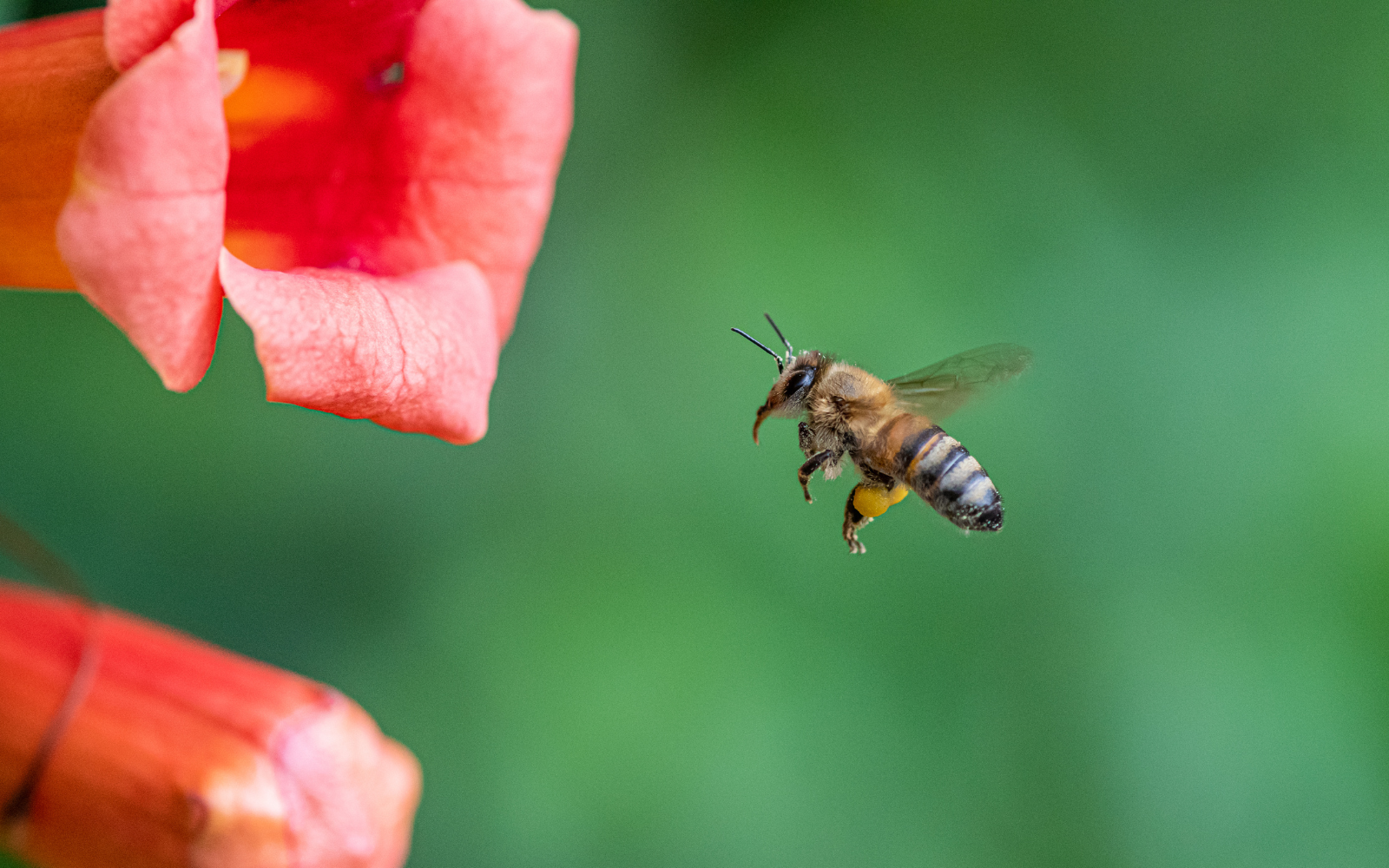
Researchers decode bees’ unique “waggle dance” inside the hive to understand where they’ve been, how far they traveled, and the quality of food sources.
