
4 JUNE 2026
Honey bees make honey from nectar and pollen as food and medicine for themselves, and to help the entire bee colony survive the long, cold winters when there are no flowers.
Honey bees emerged as a species around 120 million years ago during an evolutionary surge – when flowering plants appeared – and carnivorous insect-eating wasps turned vegetarian and began feeding pollen instead of insects to their young. The wasps’ change in behaviour drove the evolution of the honey bees we know today.
Over millions of years, honey bees evolved techniques such as mixing nectar with pollen to form easy-to-carry bundles and developed wax secretion glands to build hexagonal honeycomb cells – shapes that maximise storage and increase surface area to help water to evaporate faster and stop microbes from growing.
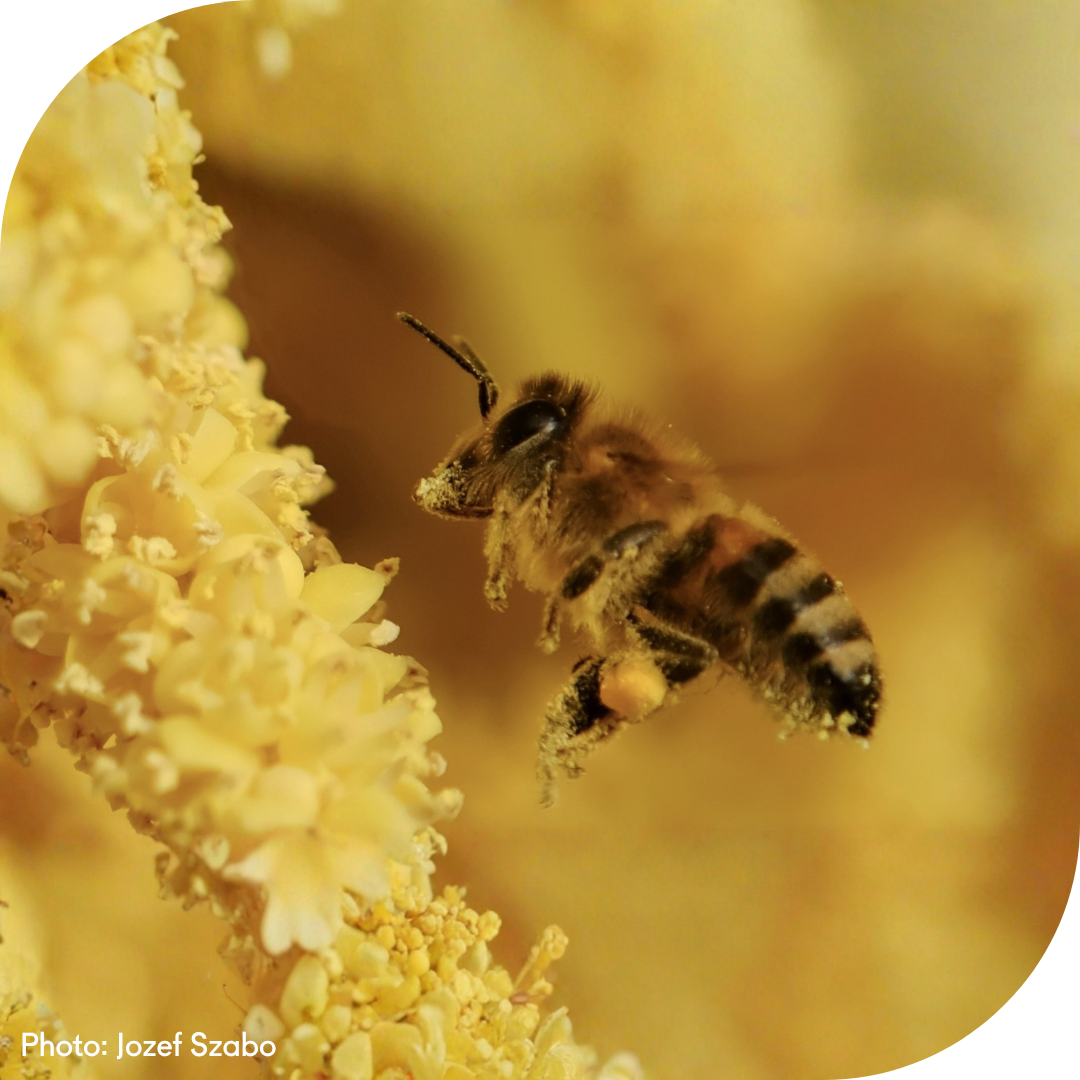
While there are well over 20,000 species of bees in the world, only eight species – assigned to the genus Apis – make honey in large enough quantities for humans to consume.
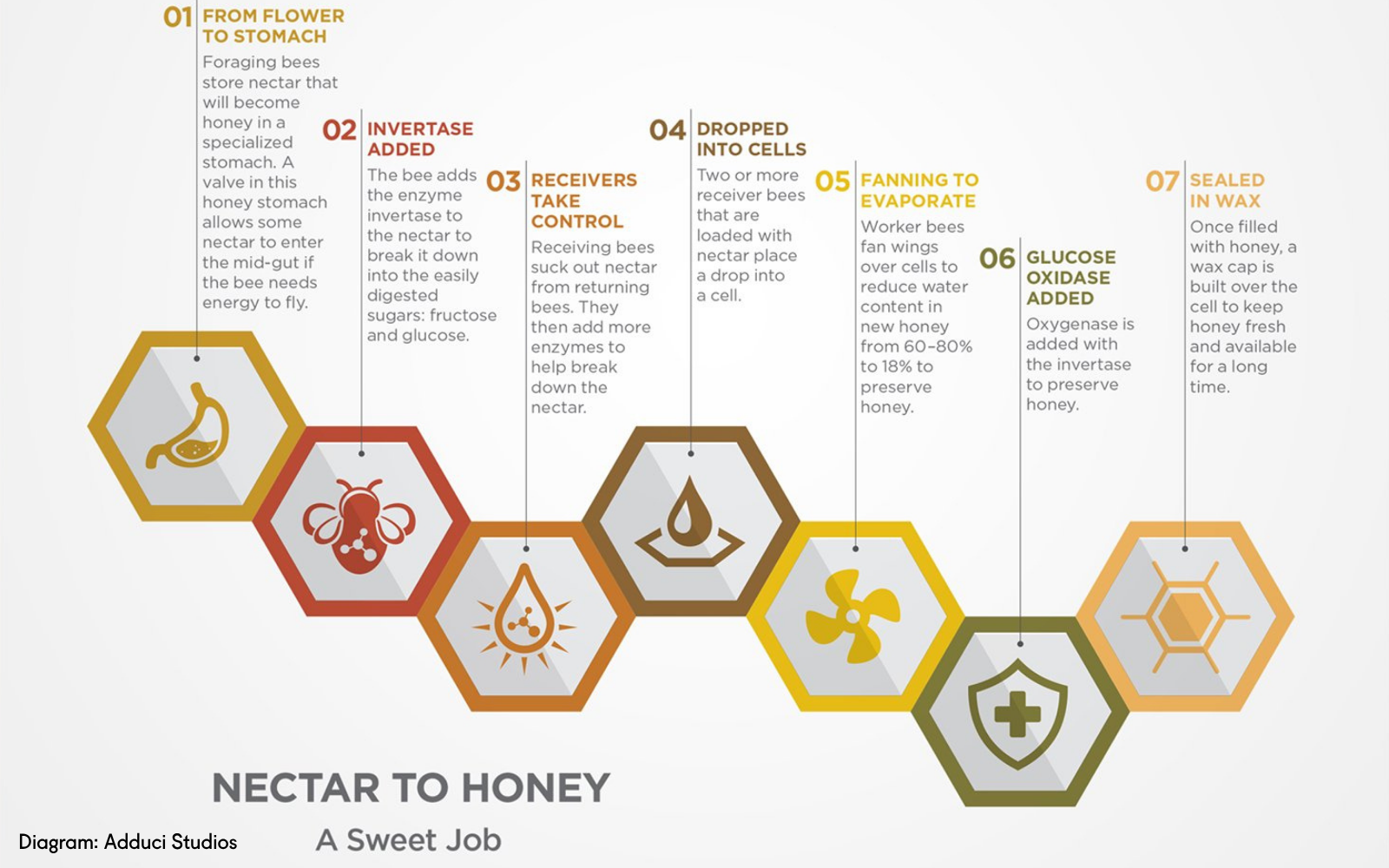
Honey-making begins when a foraging honey bee collects nectar. Instead of digesting it, she stores it in her “honey stomach”, where enzymes begin breaking it down. Once at the hive, she passes on the nectar to another bee and so it goes, from bee-to-bee, in a kind of assembly line of regurgitation. Each transfer adds more enzymes. The chemical interactions and transformations continue as enzymes convert sugars into simpler forms, acids lower the pH, making honey more stable, and the small amounts of hydrogen peroxide produced in the process help to prevent microbes from growing.
Eventually, the bees deposit the liquid into a honeycomb cell, where they fan it with their wings to evaporate the water. Once ready, they seal the honey cells with wax and store them to feed to their young and to use as their own food when there are no flowers to forage on.
Until a few decades ago, scientists and beekeepers were convinced that honey was mainly sugar, a vital energy source for bees, but recent research reveals that beyond the sugar lies a saga of biology, chemistry, and millions of years of evolution.
A 2017 study led by May Berenbaum, Professor of Entomology at the University of Illinois Urbana-Champaign, found that honey contains enzymes, vitamins, minerals, and plant-derived compounds that play important roles in keeping honey bees healthy. Thanks to the honey they eat, honey bees live longer, boost their tolerance of cold and heighten their defences against infections and injuries.
Given the long evolutionary relationship between honey bees and flowering plants, varying floral sources provide different protective compounds. This is why honey contains plant chemicals known as phytochemicals, which boost the honey bees’ immune systems, improve their tolerance to pesticides, help fight infections and parasites and support healthy gut microbes. Interestingly, different types of honey offer different benefits. Specific honeys act like natural antibiotics, and bees are aware of this. Entomologist Silvio Erler and his team at the Julius Kühn-Institut in Germany offered parasite-infected honeybees four types of honey and reported in Behavioral Ecology and Sociobiology that the sick bees chose sunflower honey, which was the most effective medicine with the highest antibiotic value. Thus, we can conclude that bees make honey as food and medicine for themselves.
It’s not just about making honey. Almost 90% of wild plants and 75% of global crops depend on pollination by bees. Without bee pollination, we would not have the nutritious fruit, vegetables and nuts our health depends on. Without trees and plants, our bio-diverse ecosystems would collapse and there would be no process of photosynthesis to provide us with the oxygen we breathe.
Descendents of carnivorous wasps, honey bees create and sustain something far greater than themselves – the most fundamental ecological partnership that life itself depends on.
TO LEARN MORE, READ THE STUDY HERE
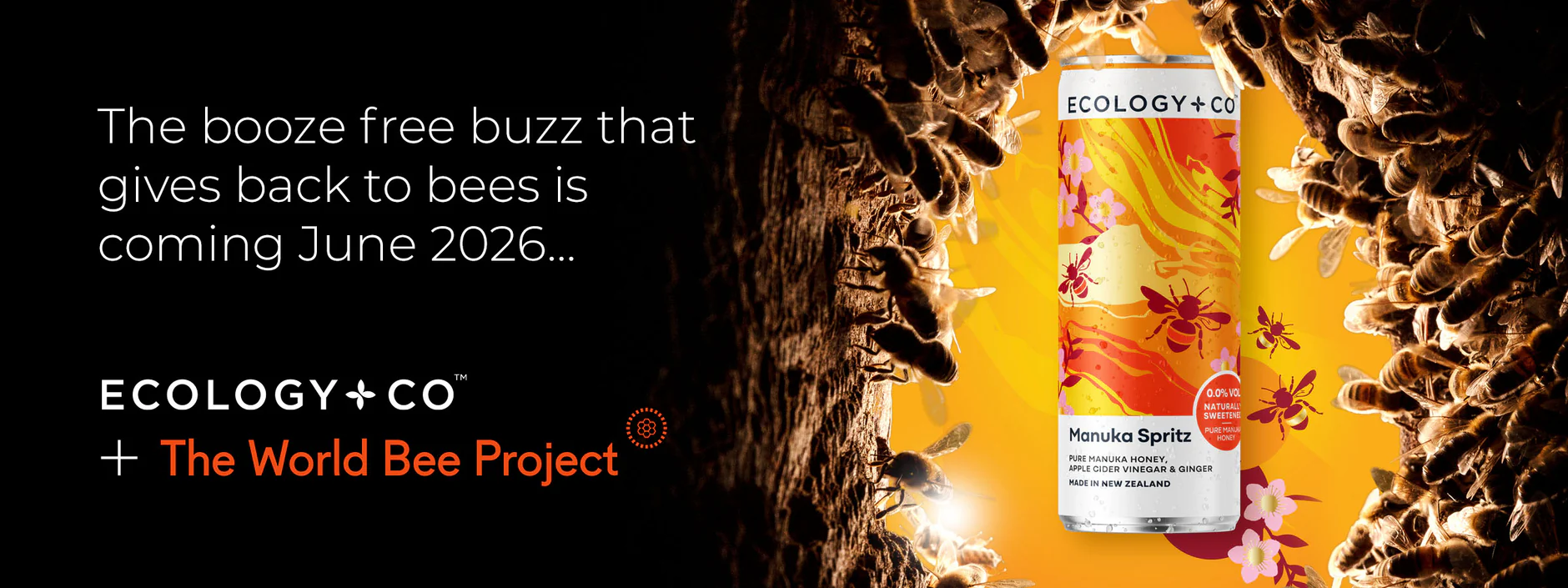
New Project Collaboration with Ecology & Co.
The World Bee Project and Ecology & Co have joined forces in support of bee conservation and biodiversity.
Ecology & Co, based in New Zealand, creates Manuka-inspired botanical drinks rooted in nature and sustainability.
As part of this partnership, 1% of every can and bottle sold globally will serve to protect pollinators, people, and the planet.
Find out more here.
FACT SHEET
The story of honey bees stretches back over 120 million years, evolving alongside flowering plants into one of nature’s most essential partnerships. But their importance doesn’t end with pollination. From the diversity of their diet to the surprising nutritional role of honey itself, bees operate within a finely balanced system where food, health, and survival are deeply connected.
Here’s a closer look at what keeps this species thriving—and why it matters more than ever.
Thought for the Day
“Through cooperation, resilience, and purpose, honey bees create something far greater than themselves.”
– Sabiha Rumani Malik, Founder, The World Bee Project
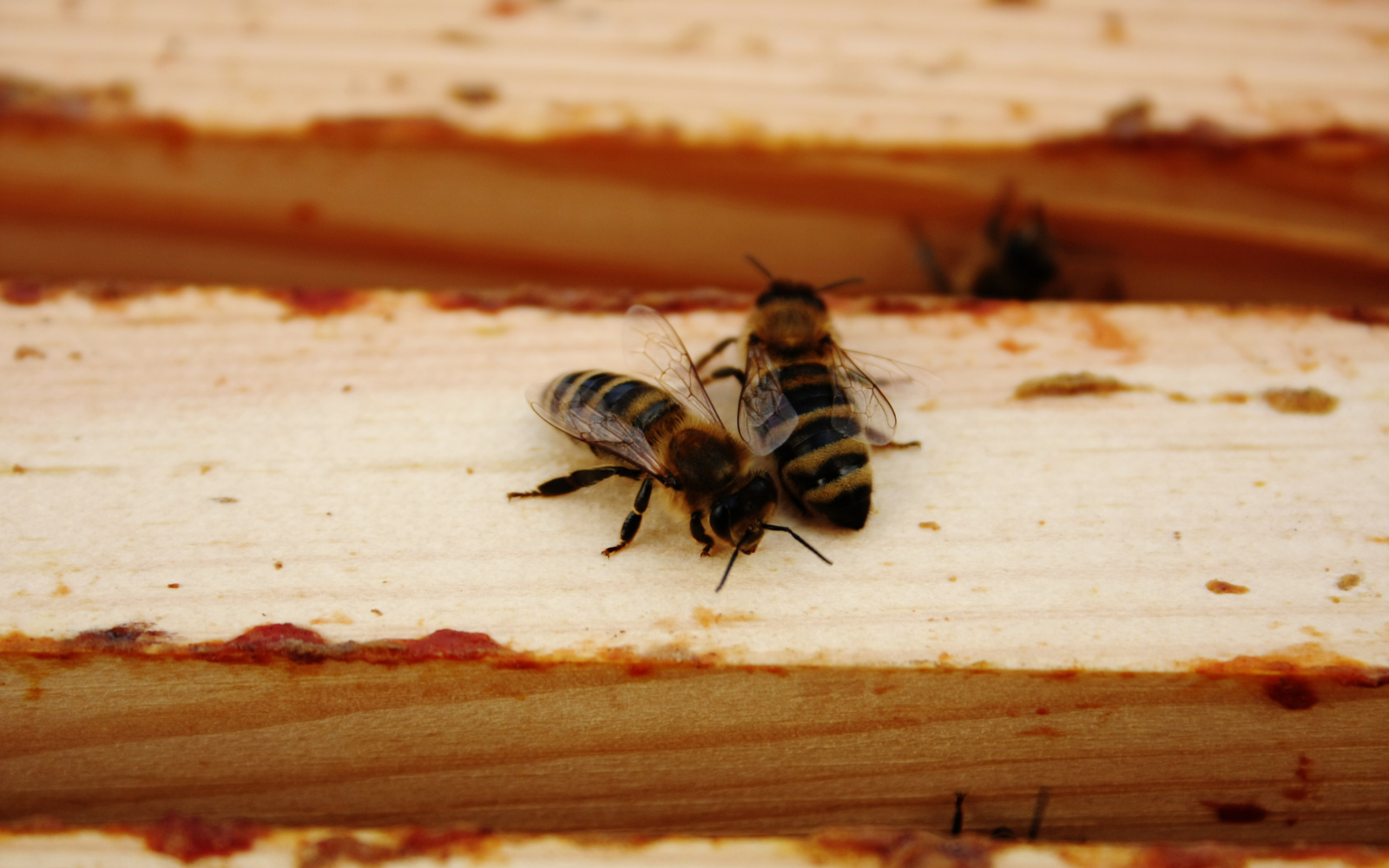
Do bees social distance?
Bees may lack strong immune systems, but their behavior tells a different story. Discover how honey bees use social distancing, detection, and adaptation to fight deadly viruses.
