
2 APRIL 2026
The future of farming may depend not just on genetics or technology, but on helping plants remember how to survive.
For more than 500 million years, plants have shaped life on Earth. They fill our atmosphere with oxygen, anchor our ecosystems, and feed our planet. But their story isn’t just one of passive growth – plants are remarkably sophisticated survivors. In fact, they can “remember” past stress and use that memory to defend themselves.
This remarkable ability, known as immune priming, is changing how scientists think about plant resilience and it could play a crucial role in securing our food supply in a warming world.
Immune priming is a plant’s version of an immune system. Unlike animals, plants can’t run away from danger. Instead, they have evolved intricate defence systems to withstand pests, pathogens, and environmental stress. Plants are naturally resistant to the vast majority of microbes, but some pathogens have evolved ways to bypass these defences, forcing plants to develop more sophisticated strategies.

Photo: Anton Volnuhin
In humans and other vertebrates, immune memory relies on specialised B and T cells that remember previous infections or vaccinations and respond faster the next time. Plants don’t have mobile immune cells. Instead, they rely on something more subtle: epigenetic defence. Epigenetic defence can be described as memory without a brain. Epigenetics are chemical changes that affect how genes behave without altering the DNA sequence itself. Somewhat like notes in the margins of a genetic instruction manual.
When plants experience stress – such as disease, drought, or insect attack – epigenetic changes can “prime” their immune system. This prepares plants to respond faster and more strongly if the threat returns. Research over the past decade and a half shows that repeated exposure to stress can leave long-lasting molecular marks on plant DNA, keeping defences on high alert even after the danger has passed.
This phenomenon occurs across the plant kingdom, from tiny short-lived annual plants to towering Norway spruce trees that can survive for centuries.
Memory comes at a cost. Primed plants often grow more slowly because energy is diverted toward protection rather than development. Fortunately, this memory isn’t permanent by default. If conditions improve, the primed state can fade over time. But when stress is intense, the memory can persist for a plant’s entire life – and at times for generations. The stronger the stress, the longer the memory.
Plants constantly adjust gene activity to adapt to their environment. One of the most intriguing players in this process is a class of DNA elements called transposons, or “jumping genes.” Normally inactive (because they can cause mutations), transposons can become partially activated under stress. Epigenetic changes around these elements help establish durable memory states that keep defence genes ready for action.
In unstressed plants, defence genes stay mostly switched off – running them continuously would waste precious energy. But after a disease or an attack, epigenetic changes near jumping genes can enable a faster, stronger response the next time trouble appears. Scientists are still unravelling the details, but it’s clear these mechanisms are central to plant adaptation.
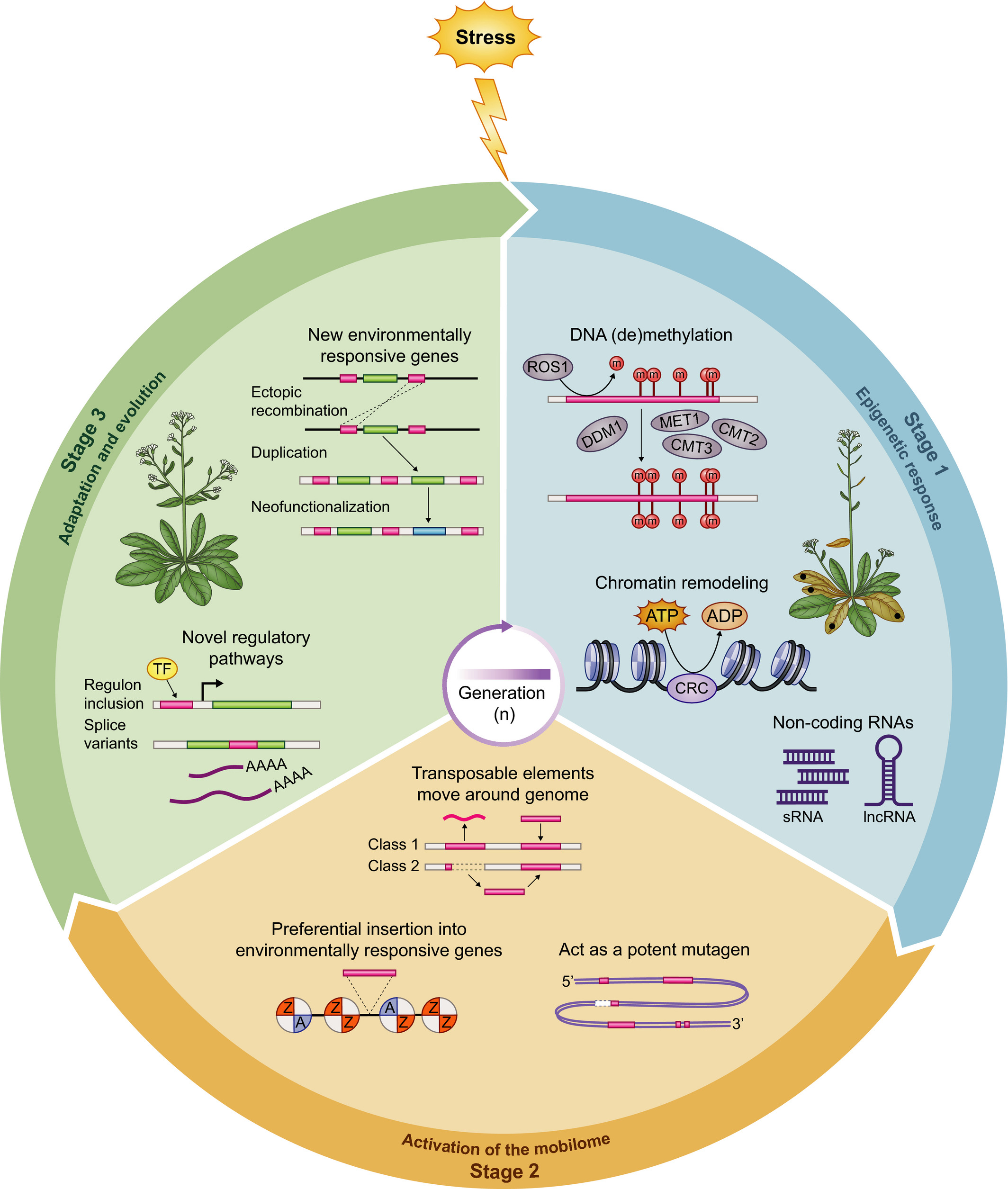
Image: New Phytologist
Plants don’t store memory only inside their cells. They can also reshape their environment to protect themselves – and future plants. When under attack, many plants release specific chemicals through their roots. These compounds attract beneficial microbes that suppress pathogens. If this microbial community becomes established, it can create a lasting “soil legacy’ which means that future plants growing in the same soil benefit from this microbial shield. Interestingly, the genes controlling these root chemicals are themselves regulated by epigenetic mechanisms, linking internal memory with environmental memory.
Understanding plant stress memory could revolutionise how we protect crops. Instead of relying heavily on chemical pesticides, farmers may one day harness plants’ natural defence systems – priming crops to resist pests, diseases, and climate stress before problems arise.
As global food demand continues to climb, and climate change intensifies droughts, heat waves, and pathogen pressures, these insights could help build more resilient, sustainable agricultural systems. The future of farming may depend not just on genetics or technology, but on helping plants remember how to survive.
READ MORE about plants here.
FACT SHEET
Plants may appear passive, but beneath their stillness lies a remarkable system of memory, adaptation, and communication.
Through subtle biological processes, they can store memories of stress, refine their defences, and even reshape the ecosystems around them. This hidden intelligence allows plants not only to respond more effectively to threats, but to prepare for them.

Thought for the Day
“Investing in research on plant stress memory may unlock sustainable, nature-based solutions for agriculture at scale. Let’s help plants remember how to survive.”
– Sabiha Rumani Malik, Founder, The World Bee Project

The Monarchy of Bees
We’ve long believed the queen bee runs the hive—but the reality is far more complex. From determining offspring to replacing leadership, worker bees quietly control the system, creating a highly coordinated, self-governing collective where power is shared, not centralized.
